Rome Travel Guide: Best Places to Visit & Things to Do
Rome is a city where ancient history and modern life exist side by side. Known as the Eternal City, Italy’s capital is famous for its impressive monuments, historic streets, beautiful churches, traditional neighbourhoods and unforgettable food. Every corner seems to tell a story, from the remains of the Roman Empire to lively public squares filled with cafés and street performers.
Whether you are interested in ancient civilisation, architecture, art, religion, shopping or Italian cuisine, Rome offers an extraordinary variety of experiences. You can explore the Colosseum in the morning, visit the Vatican Museums in the afternoon, enjoy authentic Italian pasta in a traditional restaurant and finish the evening walking beside historic fountains and illuminated buildings.
But Rome is more than its famous tourist attractions. Its character can also be found in neighbourhood bakeries, local markets, narrow cobbled streets and outdoor restaurants where people gather to enjoy good food and conversation.
If you are planning your first visit or returning to discover more of the city, this Rome travel guide will help you explore its main attractions, experience local culture, understand transport options and plan a memorable trip.
What Makes Rome Special?
Rome has a history that stretches back more than 2,700 years. It was the centre of the Roman Empire, one of the most influential political and cultural powers in ancient history. The city’s historical importance can still be seen in its monuments, archaeological sites and architectural remains.
One of Rome’s most remarkable features is the way ancient structures are integrated into everyday city life. You might walk past a centuries-old church, discover Roman ruins beside a busy road or find an ancient monument surrounded by modern shops and restaurants.
The city is also closely connected with art and religion. It contains remarkable churches, sculptures, paintings and architectural masterpieces created by some of Europe’s most influential artists.
Another reason to visit Rome is its food culture. Italian cuisine is an essential part of the experience, with pasta, pizza, gelato, coffee and regional specialities available throughout the city.
Rome offers a combination of historical discovery and relaxed everyday experiences that makes it rewarding for many different types of travellers.
Best Places to Visit in Rome
Rome has an extraordinary collection of attractions. If you are visiting for the first time, these landmarks are excellent starting points.
1. The Colosseum
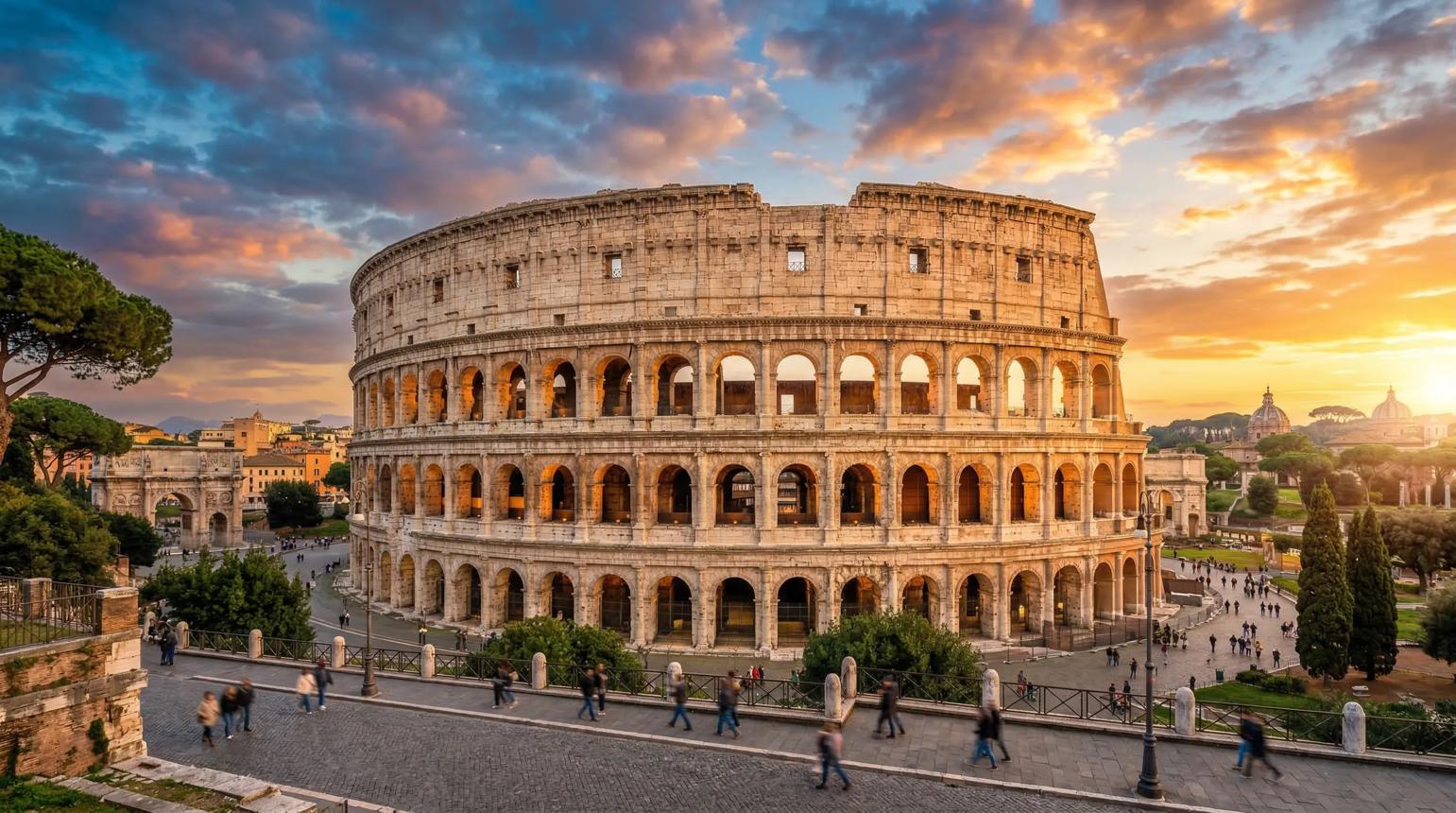
The Colosseum is one of the most famous ancient structures in the world and a powerful symbol of the Roman Empire.
Completed in the first century AD, this enormous amphitheatre was used for public spectacles, including gladiatorial contests and other events. It could accommodate a large audience and demonstrated the engineering abilities of ancient Roman society.
Today, visitors can explore different levels of the structure, learn about its history and see how the amphitheatre was designed.
Some tickets include access to additional areas, such as the underground sections or upper levels. Availability and visitor routes vary, so check official ticket information before planning your visit.
The Colosseum is especially impressive when viewed from the surrounding archaeological area. Arriving early or booking an appropriate time slot can help you manage crowds.
2. Roman Forum
Located close to the Colosseum, the Roman Forum was once the centre of political, commercial and public life in ancient Rome.
It contains the remains of temples, government buildings, public spaces and monuments that reveal how the city functioned during the Roman period.
Walking through the archaeological area gives visitors a better understanding of ancient Roman society. You can see the remains of important structures and imagine how the area once looked when it was filled with markets, public gatherings and political discussions.
The Forum is often visited together with the Colosseum and Palatine Hill, making it convenient to explore these historical sites in one day.
3. Pantheon
The Pantheon is one of the best-preserved monuments from ancient Rome.
Originally constructed as a temple and later converted into a Christian church, it is famous for its enormous dome and central opening known as the oculus.
The architectural design is remarkable, particularly considering the age of the building. Natural light enters through the opening in the dome, creating a distinctive atmosphere inside.
The Pantheon is located in a lively central area surrounded by cafés, restaurants and historic streets.
Check current visitor arrangements and admission requirements before visiting, as access policies may change.
4. Trevi Fountain
The Trevi Fountain is one of Rome’s most recognisable attractions.
This impressive Baroque fountain features detailed sculptures and a dramatic composition centred around the figure of Oceanus. It attracts visitors throughout the day and becomes particularly beautiful when illuminated after sunset.
A popular tradition involves throwing a coin into the fountain using the right hand over the left shoulder. According to the tradition, this is supposed to bring a future return to Rome.
The area can become very crowded, especially during peak tourist periods. Visiting early in the morning or later in the evening can provide a more comfortable experience.
Remember to follow the local rules around the fountain and avoid entering the water.
5. Vatican City and St. Peter’s Basilica
Vatican City is an independent city-state surrounded by Rome and the headquarters of the Roman Catholic Church.
It is home to several internationally recognised religious and cultural landmarks, including St. Peter’s Basilica, St. Peter’s Square and the Vatican Museums.
St. Peter’s Basilica is famous for its impressive architecture, religious significance and remarkable interior. Visitors can admire sculptures, mosaics and other works of art, including Michelangelo’s celebrated Pietà.
The square outside the basilica is another important attraction. Designed by Gian Lorenzo Bernini, its grand columns and open space create an impressive setting.
Remember that the Vatican has specific dress expectations for visitors entering religious sites. Check the current rules before your visit.
6. Vatican Museums and Sistine Chapel
The Vatican Museums contain one of the world’s most important collections of art and historical objects.
Their galleries feature sculptures, paintings, maps, decorative works and collections assembled over many centuries.
The most famous highlight for many visitors is the Sistine Chapel, whose ceiling was painted by Michelangelo. The artwork includes the celebrated Creation of Adam and numerous other biblical scenes.
The museums are extensive, so planning your route is important. Booking tickets in advance is strongly recommended, especially during busy periods.
Photography and visitor behaviour rules apply in different areas, particularly inside the Sistine Chapel. Follow the instructions provided by museum staff.
7. Piazza Navona
Piazza Navona is one of Rome’s most beautiful public squares.
Built on the site of an ancient Roman stadium, the square is known for its elongated shape, Baroque architecture, outdoor cafés and fountains.
Its most famous feature is the Fountain of the Four Rivers, designed by Bernini. The surrounding buildings and churches create an attractive setting for walking and photography.
Piazza Navona is a pleasant place to relax after visiting nearby attractions. You can enjoy a coffee, explore the surrounding streets or simply observe the lively atmosphere.
Explore Rome’s Most Interesting Neighbourhoods
Rome’s neighbourhoods offer more than historic monuments. Each area has its own personality, local traditions and opportunities to experience everyday Italian life.
Trastevere
Trastevere is one of Rome’s most charming neighbourhoods.
Located across the River Tiber from the historic centre, it is known for its narrow streets, traditional buildings, small restaurants and lively evening atmosphere.
The neighbourhood is particularly popular for dining. Visitors can explore local trattorias, enjoy Italian dishes and discover quieter streets away from the busiest tourist areas.
Trastevere is also a pleasant place to walk during the day, when its historic character and small squares are easier to appreciate.
Monti
Monti is a historic neighbourhood close to the Colosseum.
It combines traditional streets with independent boutiques, cafés, small restaurants and local businesses. The area has a relaxed atmosphere that attracts both residents and visitors.
It is an excellent destination for travellers interested in exploring smaller shops and enjoying a meal away from some of the busiest tourist streets.
Testaccio
Testaccio has a strong connection with traditional Roman food culture.
The neighbourhood is known for its local markets, restaurants and culinary history. It offers an opportunity to experience a more everyday side of Rome, away from the main sightseeing routes.
Visitors interested in local cuisine should consider exploring its food market and traditional eateries.
Centro Storico
The historic centre is home to many of Rome’s most famous attractions, including the Pantheon, Trevi Fountain and Piazza Navona.
It is ideal for visitors who want to explore several landmarks on foot. Its streets are filled with historic buildings, churches, cafés, restaurants and small shops.
Although some areas can become crowded, the historic centre remains one of the most rewarding places to explore.
Discover Rome’s Churches, Art and Architecture
Rome is an extraordinary destination for people interested in art, architecture and religious history.
Beyond St. Peter’s Basilica, the city contains many beautiful churches and historic buildings.
Basilica of Santa Maria Maggiore: One of Rome’s major papal basilicas, known for its historic architecture and beautiful interior decoration.
Basilica of San Clemente: An especially interesting site because different historical layers of the city can be explored within the complex, including structures from earlier periods.
Church of Sant’Ignazio di Loyola: Famous for its impressive painted ceiling, which creates an illusion of architectural depth.
Galleria Borghese: A major art museum located within the Villa Borghese gardens. Its collection includes important works by artists such as Bernini and Caravaggio. Advance reservations are generally necessary.
Capitoline Museums: These museums contain important archaeological objects, sculptures and artworks connected with Rome’s history.
You do not need to visit every museum or church to appreciate the city’s cultural heritage. Choose places that match your interests and allow enough time to enjoy them.
What to Eat in Rome
Roman food is one of the biggest highlights of visiting the city. Its traditional cuisine often uses simple ingredients to create rich and satisfying flavours.
Here are some local dishes worth trying.
Cacio e Pepe
Cacio e pepe is one of Rome’s most famous pasta dishes.
It is traditionally prepared with pasta, Pecorino Romano cheese and black pepper. Despite using relatively few ingredients, the dish has a distinctive flavour and creamy texture when prepared correctly.
Carbonara
Pasta carbonara is another classic Roman dish.
Traditional versions commonly use eggs, Pecorino Romano cheese, black pepper and guanciale, a cured pork cheek product.
Different restaurants may offer their own variations, but trying a traditional preparation is a memorable food experience.
Amatriciana
Amatriciana is a pasta sauce made with ingredients such as tomatoes, guanciale and Pecorino Romano cheese.
It is associated with the town of Amatrice but is also an important part of Roman restaurant culture.
Roman-Style Pizza
Roman pizza comes in different styles. One popular version has a thin and crisp base, while pizza al taglio is commonly sold by weight in rectangular slices.
You can find pizza shops throughout Rome, making it a convenient option for a quick lunch or casual meal.
Supplì
Supplì are fried rice balls, traditionally filled with tomato rice and mozzarella.
When broken open, the melted cheese creates a string-like effect, which is why the dish is sometimes called supplì al telefono.
They are commonly enjoyed as a snack or starter.
Gelato
Italian gelato is a popular treat and a must-try during a visit to Rome.
It comes in many flavours, including pistachio, chocolate, hazelnut, strawberry and seasonal fruit varieties.
Look for gelaterias that display gelato naturally and offer clear ingredient information rather than relying only on large decorative displays.
Shopping and Markets in Rome
Rome offers a variety of shopping experiences, from international fashion brands to independent boutiques and traditional markets.
Via del Corso is one of the city’s main shopping streets, featuring a mixture of well-known retailers and local shops.
For luxury fashion, explore Via dei Condotti and the surrounding streets near the Spanish Steps.
The Monti neighbourhood is a good choice for independent boutiques, vintage clothing and smaller creative businesses.
If you enjoy traditional markets, Campo de’ Fiori is a well-known destination with stalls selling produce, flowers and other items. Its atmosphere changes throughout the day, so it is worth exploring in the morning.
For food-related shopping, local markets provide opportunities to discover Italian cheeses, fresh produce, baked goods and regional products.
Getting Around Rome
Rome has several transport options that make it possible to explore the city without renting a car.
Rome Metro
The Rome Metro is useful for travelling between major areas of the city.
Although its network is smaller than those of some other European capitals, it connects important locations, including areas near the Colosseum and Vatican Museums.
Check routes and service information before travelling, particularly if you are planning to visit attractions outside the historic centre.
Buses and Trams
Rome has an extensive bus network and several tram routes.
Buses can be useful for reaching locations that are not directly connected by the Metro. However, traffic congestion may make some journeys slower than expected.
Walking
Walking is one of the best ways to explore central Rome.
Many major attractions are relatively close to one another, and walking allows you to discover fountains, historic churches, small squares and beautiful streets along the way.
Wear comfortable shoes because the city has many uneven and cobbled surfaces.
Taxis
Official taxis are available throughout Rome, including at designated taxi ranks and major transport hubs.
Use licensed services and confirm that the meter is operating. You can also check official taxi information for airport transfers and other journeys.
Best Time to Visit Rome
Rome is a year-round destination, but different seasons offer different experiences.
Spring (March to May): Spring is one of the most pleasant periods for sightseeing. Temperatures are generally mild, gardens become more attractive and walking around historic sites is comfortable. Easter can bring particularly large crowds and special religious events.
Summer (June to August): Summer brings long daylight hours and lively streets. However, temperatures can become very high, particularly in July and August. Popular attractions can also be crowded, so plan outdoor sightseeing early in the day and take breaks during the hottest hours.
Autumn (September to November): Autumn offers more comfortable temperatures in many weeks and a pleasant atmosphere for exploring the city. September and October can be especially attractive for walking and outdoor dining.
Winter (December to February): Winter is generally cooler and can be rainy, but it offers opportunities to explore museums and historic buildings with a different atmosphere. Christmas decorations and religious celebrations add seasonal interest.
For many visitors, spring and early autumn offer a good balance of comfortable weather and sightseeing conditions.
A Practical Three-Day Rome Itinerary
If you have three days in Rome, organise your visits by area to make your schedule more manageable.
Day 1: Ancient Rome
Start your day at the Colosseum. Explore the monument and learn about its role in ancient Roman entertainment and society.
Continue towards the Roman Forum and Palatine Hill. These sites provide a deeper understanding of the ancient city.
In the afternoon, walk towards the Capitoline area and explore nearby historic streets. Finish your day with dinner in Monti or another nearby neighbourhood.
Day 2: Vatican City and the Historic Centre
Begin with the Vatican Museums and Sistine Chapel. Allow sufficient time for the galleries and book your tickets in advance.
Afterwards, visit St. Peter’s Basilica and explore St. Peter’s Square.
Later, return towards the historic centre and visit Piazza Navona and the Pantheon. Finish the day at the Trevi Fountain, ideally when the evening lighting creates a beautiful atmosphere.
Day 3: Squares, Gardens and Local Life
Start at the Spanish Steps and explore the surrounding streets.
Continue towards Villa Borghese, where you can enjoy a walk through one of Rome’s most attractive green spaces.
In the afternoon, explore Trastevere or Testaccio to experience a different side of the city. Enjoy traditional Roman food and spend time discovering the local streets.
This itinerary can be adjusted according to attraction opening times, ticket availability and your preferred pace.
Where to Stay in Rome
Choosing the right neighbourhood can make your visit more comfortable and reduce travel time.
Centro Storico: Ideal for visitors who want to stay close to famous landmarks, historic squares and restaurants. Accommodation can be expensive in the most central locations.
Trastevere: A good choice for travellers who enjoy traditional streets, local restaurants and evening activity. Some streets can be lively at night.
Monti: Convenient for exploring ancient Rome, with independent shops, cafés and restaurants nearby.
Prati: Located near Vatican City, this neighbourhood offers residential streets, shopping opportunities and access to public transport.
Termini Area: A practical location for visitors who prioritise railway connections and transport access. Compare individual accommodation reviews and street locations before booking.
When choosing accommodation, check its distance from public transport, recent guest reviews, cancellation policy and total price.
Practical Travel Tips for Rome
A few simple preparations can make your trip easier.
- Book major attractions in advance: The Colosseum, Vatican Museums and other popular sites can have limited entry availability.
- Wear comfortable shoes: Rome’s streets often include cobblestones and uneven surfaces.
- Carry water: Public drinking fountains known as nasoni can be found around the city. Use them responsibly and follow local guidance.
- Respect religious sites: Churches and basilicas may require modest clothing, and visitors should follow posted dress and behaviour rules.
- Watch your belongings: Stay alert in crowded areas, particularly around major attractions and transport stations.
- Check attraction schedules: Some museums and archaeological sites have specific closing days or seasonal hours.
- Plan around the heat: During summer, explore outdoor attractions early in the morning or later in the afternoon.
- Use official ticket websites: This helps you understand entry arrangements and avoid misleading third-party offers.
- Learn basic Italian greetings: Words such as Buongiorno (good morning), Grazie (thank you) and Per favore (please) can make everyday interactions more pleasant.
- Check visa requirements: International visitors should confirm current Italian and Schengen entry requirements through official sources before travelling.
Travelling Responsibly in Rome
Rome’s historical sites and cultural landmarks require care and respect.
Follow instructions at archaeological locations, avoid climbing on protected structures and never remove objects or stones from historic sites.
When visiting churches and religious buildings, respect local customs, dress requirements and quiet areas.
Support local restaurants, bakeries and independent shops where possible. Walking and using public transport can also reduce the environmental impact of your visit.
Keep public spaces clean and avoid activities that damage historic monuments or disturb residents.
Remember that Rome is not simply an open-air museum. It is a living city where people work, study and maintain everyday routines. Being considerate of local communities makes tourism more positive for everyone.
Final Thoughts: Is Rome Worth Visiting?
Rome is a destination that offers something special to almost every traveller. Its ancient monuments reveal the history of a powerful civilisation, its museums preserve remarkable artistic achievements and its neighbourhoods offer a glimpse into everyday Italian life.
You can spend your days exploring the Colosseum, discovering the Vatican, admiring historic architecture, enjoying traditional pasta or relaxing in a beautiful public square.
Although the city can become crowded, especially around its most famous attractions, careful planning makes it possible to enjoy a rewarding visit. Choosing the right accommodation, booking popular sites ahead of time and exploring different neighbourhoods can help you make the most of your stay.
Whether you are visiting Rome for its history, food, architecture or culture, the city offers countless reasons to return.
Plan your journey, leave some time for unexpected discoveries and enjoy the experience of exploring one of Europe’s most fascinating capitals.
Ready to discover Rome? Add the Eternal City to your travel plans and experience its extraordinary history, culture and Italian charm.