Cusco Travel Guide: Best Places to Visit, Inca History, Food & Things to D
Introduction
Cusco is one of South America’s most fascinating travel destinations, offering a remarkable combination of ancient history, traditional culture, mountain scenery and colourful local life. Located high in the Peruvian Andes, this historic city was once the capital of the Inca Empire and remains one of the most important cultural destinations in Peru.
Walking through Cusco feels like travelling through different periods of history. Ancient Inca stone walls stand beneath Spanish colonial buildings, traditional markets fill historic streets, and beautiful churches surround lively public squares.
The city is also the main starting point for many visitors travelling to Machu Picchu, one of the world’s most famous archaeological sites. However, Cusco deserves more than a quick overnight stay before heading to the ruins. Its own attractions, museums, nearby archaeological sites and surrounding landscapes offer plenty to explore.
Visitors can discover ancient temples, visit traditional villages, hike through the Andes, taste authentic Peruvian food and learn about the traditions of local communities.
Whether you are interested in archaeology, adventure, photography or cultural experiences, Cusco offers a memorable journey into Peru’s history.
This guide covers the best places to visit, local experiences, traditional food, accommodation, transport and practical tips to help you plan your trip.
What Makes Cusco Special?
Cusco is special because of its extraordinary connection to the Inca civilisation.
Before the arrival of the Spanish in the sixteenth century, Cusco was the political and cultural centre of a powerful empire that extended across large parts of western South America.
The Incas developed impressive stone construction techniques, agricultural systems and road networks connecting distant regions.
Many examples of their architecture can still be seen throughout the city. Some colonial buildings were constructed directly over earlier Inca foundations, creating a unique combination of architectural styles.
Cusco is also closely connected to the Quechua culture, which remains an important part of everyday life in the Andes. Traditional clothing, local languages, agricultural practices, festivals and handicrafts continue to shape the region’s identity.
Its location in the mountains adds another dimension. The surrounding Andes provide opportunities for hiking, exploring archaeological sites and visiting traditional communities.
Best Places to Visit in Cusco
1. Plaza de Armas
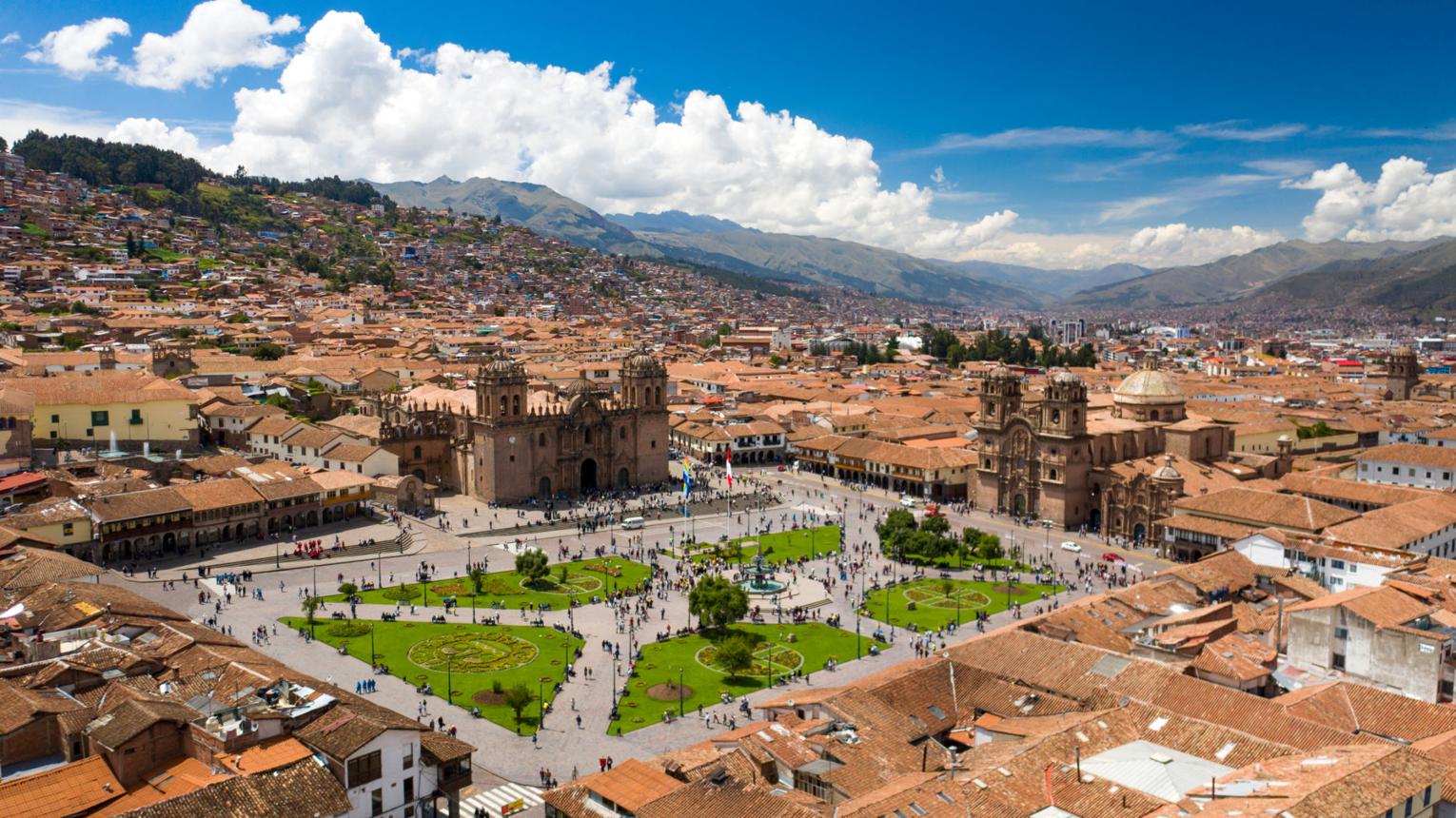
Plaza de Armas is the main historic square in Cusco and an excellent starting point for exploring the city.
Surrounded by colonial buildings, restaurants, shops and historic churches, it is one of the city’s most recognisable locations.
The square has been an important public gathering place since Inca times, although its appearance changed significantly during the colonial period.
Visitors can enjoy the architecture, relax at nearby cafés and explore the surrounding streets.
The atmosphere becomes particularly lively during festivals and public celebrations.
2. Qorikancha (Temple of the Sun)
Qorikancha was one of the most important religious sites of the Inca Empire.
Dedicated to the sun deity Inti, the original complex was renowned for its remarkable stonework and religious significance.
After the Spanish conquest, the Church of Santo Domingo was built over part of the site.
Today, visitors can explore sections of the surviving Inca architecture alongside colonial structures.
The site provides an excellent introduction to Inca religious beliefs, engineering and the transformation of Cusco during the colonial period.
3. Sacsayhuamán
Sacsayhuamán is an impressive archaeological complex located on a hill overlooking Cusco.
It is famous for its enormous stone walls, which were constructed using precisely fitted stones without modern mortar.
Some of the stones are exceptionally large, demonstrating the remarkable engineering skills of the Inca builders.
The site also offers beautiful views across Cusco and the surrounding mountains.
Allow enough time to explore the different sections and learn about its historical and ceremonial importance.
4. San Pedro Market
San Pedro Market is one of the best places to experience everyday life in Cusco.
The market offers a wide range of products, including fresh fruit, vegetables, traditional foods, textiles, flowers and local ingredients.
Visitors can explore food stalls, observe local shopping traditions and discover regional products.
It is also a good place to try traditional Peruvian snacks, although travellers should choose food stalls carefully and pay attention to food hygiene.
Always ask permission before photographing vendors or their products.
5. Cusco Cathedral
Cusco Cathedral dominates one side of Plaza de Armas and is among the city’s most important colonial buildings.
Its construction began during the Spanish colonial period, using stones taken from earlier Inca structures.
The cathedral contains religious artwork, sculptures and decorative features reflecting the mixture of European and local artistic traditions.
Visitors interested in colonial history and religious architecture will find it particularly interesting.
Check visiting arrangements and photography restrictions before entering.
6. Inca Museum
The Inca Museum provides an introduction to the history and culture of the Inca civilisation.
Its collections include archaeological objects, textiles, ceramics and other historical materials.
The museum helps visitors understand the society that developed across the Andes and the importance of Cusco as its political centre.
It is especially worthwhile before visiting major archaeological sites because it provides useful historical context.
7. Twelve-Angled Stone
The Twelve-Angled Stone is a famous example of Inca stonework located along Hatun Rumiyoc Street.
It is recognised for its carefully shaped edges and precise placement within a larger stone wall.
Although it is a relatively small attraction, it demonstrates the remarkable craftsmanship associated with Inca architecture.
The surrounding streets are also worth exploring because they contain many examples of historic stone construction.
8. San Blas Neighbourhood
San Blas is one of Cusco’s most charming neighbourhoods.
Located uphill from the historic centre, it is known for narrow streets, traditional buildings, artisan workshops and small cafés.
The neighbourhood has a creative atmosphere, with independent galleries and shops selling handmade products.
Its elevated location also provides attractive views across the city.
The streets are steep, so take your time when walking uphill.
9. Cristo Blanco
Cristo Blanco is a large statue overlooking Cusco from a hillside near Sacsayhuamán.
The location provides panoramic views of the city and surrounding mountains.
It is a popular place for photography, particularly in the late afternoon.
Visitors can reach the area by walking or using local transport, depending on their starting point and fitness level.
10. Tambomachay
Tambomachay is an archaeological site located outside central Cusco.
It is particularly associated with water, featuring stone channels, fountains and carefully constructed waterways.
The site demonstrates the importance of water management and ceremonial architecture in Inca society.
It is often visited alongside other nearby archaeological attractions, including Puka Pukara and Q’enqo.
Discover the Sacred Valley
The Sacred Valley is one of the most rewarding areas to explore outside Cusco.
Located between Cusco and the wider Machu Picchu region, it contains beautiful landscapes, traditional communities, agricultural terraces and important archaeological sites.
1. Pisac
Pisac is famous for its archaeological complex and traditional market.
The ruins are located above the town and include agricultural terraces, ceremonial structures and impressive mountain views.
The town’s market is a popular place to browse textiles, ceramics and handmade souvenirs.
It is an excellent destination for visitors interested in both history and local crafts.
2. Ollantaytambo
Ollantaytambo is a historic town with impressive Inca architecture and a remarkable archaeological complex.
Its original street layout and stone structures provide a sense of how an Inca settlement functioned.
The archaeological site features terraces and ceremonial areas built into the mountainside.
Ollantaytambo is also an important transport point for travellers taking trains towards Machu Picchu.
3. Moray
Moray is an unusual archaeological site known for its large circular agricultural terraces.
The terraces descend into the ground in a series of rings, creating a distinctive landscape.
They are widely associated with Inca agricultural experimentation and demonstrate the civilisation’s knowledge of farming and environmental conditions.
4. Maras Salt Mines
The Maras salt mines consist of thousands of small evaporation pools built into a mountainside.
Saltwater flows through channels into the pools, where sunlight helps evaporate the water and leave salt behind.
The site has been used for salt production for generations and remains an important local activity.
Visitors should follow designated routes and respect working areas.
Machu Picchu: A Journey from Cusco
No Cusco travel guide would be complete without mentioning Machu Picchu.
Located in the Peruvian Andes, Machu Picchu is one of the world’s most celebrated archaeological sites and a UNESCO World Heritage Site.
The ancient Inca settlement is famous for its stone buildings, agricultural terraces and dramatic mountain setting.
Many visitors travel from Cusco through the Sacred Valley before reaching the town of Aguas Calientes, which serves as the main access point for the archaeological site.
Train journeys are a popular option, while trekking routes such as the Inca Trail offer a more adventurous experience.
A visit requires planning because entrance arrangements, circuits, tickets and transport schedules are controlled and may change.
Book through official channels or reputable operators, particularly during busy travel periods.
Allow enough time for the journey rather than trying to fit everything into a rushed day.
Traditional Peruvian Food: What Should You Try in Cusco?
Peruvian cuisine is known for its variety, regional ingredients and distinctive flavours. Cusco offers opportunities to try traditional Andean dishes alongside popular Peruvian favourites.
1. Cuy
Cuy, or guinea pig, is a traditional dish in parts of the Andes.
It has cultural and historical significance in the region and is commonly prepared roasted or baked.
It may be unfamiliar to international visitors, but it is an important part of local food traditions.
2. Lomo Saltado
Lomo saltado is a popular Peruvian dish combining beef, onions, tomatoes and other ingredients cooked together in a hot pan.
It is commonly served with rice and French fries.
The dish reflects the influence of Chinese-Peruvian cooking traditions.
3. Aji de Gallina
Aji de gallina is a creamy chicken dish prepared with a sauce containing yellow chilli peppers, bread or other thickening ingredients.
It is usually served with rice and potatoes.
Its mild richness makes it a popular choice in traditional restaurants.
4. Alpaca Meat
Alpaca meat is another regional speciality found in some restaurants in Cusco.
It is generally lean and can be prepared grilled or in other traditional styles.
Visitors interested in regional cuisine may want to try it at a reputable restaurant.
5. Choclo con Queso
Choclo con queso combines large-kernel Andean corn with local cheese.
It is a simple traditional snack often sold in markets and roadside food stalls.
6. Quinoa Soup
Quinoa is an important crop in the Andes and is used in many traditional dishes.
Quinoa soup is a comforting option that may include vegetables, herbs and other local ingredients.
It is particularly enjoyable in cooler mountain weather.
7. Anticuchos
Anticuchos are skewered pieces of marinated meat, commonly grilled and served with potatoes or sauces.
They are popular street food in Peru and can be found in different regional variations.
8. Chicha Morada
Chicha morada is a traditional non-alcoholic drink made using purple corn, fruit and spices.
It has a distinctive deep-purple colour and is a refreshing alternative to soft drinks.
9. Mate de Coca
Mate de coca is an herbal infusion made from coca leaves and is traditionally consumed in parts of the Andes.
Some people drink it as part of local high-altitude traditions.
Visitors should be aware that coca products may be subject to restrictions when travelling internationally. Check the laws of your destination and transit countries before purchasing or carrying them.
10. Peruvian Chocolate
Peru produces high-quality cacao, and Cusco has shops selling locally made chocolate products.
Chocolate tastings and small specialist shops provide opportunities to discover regional flavours.
If you have food allergies or dietary restrictions, ask about ingredients before ordering. Traditional dishes may contain dairy, peanuts, nuts, wheat, chilli or meat products.
Culture and Local Experiences
Cusco offers many opportunities to learn about Andean traditions and the cultural identity of local communities.
Experience Traditional Andean Music
Traditional Andean music often features instruments such as panpipes, flutes and charango.
Visitors may encounter performances in cultural venues, festivals and local celebrations.
Music is an important part of community identity and is often connected to regional history and traditions.
Explore Local Textile Workshops
The Cusco region is famous for its weaving traditions.
Local artisans produce textiles using traditional techniques, natural colours and patterns that may represent regional identity.
Visiting a reputable workshop can help visitors understand the work involved in creating these products.
Attend a Traditional Festival
Cusco hosts several important cultural celebrations throughout the year.
Inti Raymi, or the Festival of the Sun, is one of the most famous events and takes place around the June solstice.
It celebrates Inca traditions through ceremonies, performances and public events.
Accommodation and transport can become particularly busy during major festivals, so advance planning is important.
Visit a Local Community
Some organised cultural experiences allow visitors to learn about traditional farming, weaving, cooking and everyday life in Andean communities.
Choose responsible operators who work with local residents and ensure that communities benefit directly from tourism.
Explore the City on Foot
Walking through Cusco’s historic streets is one of the simplest ways to appreciate its character.
You can discover small courtyards, colonial buildings, traditional shops and impressive stone walls at your own pace.
Shopping in Cusco
Cusco is an excellent destination for visitors interested in traditional Peruvian crafts.
Markets and independent shops offer a wide variety of handmade products.
Popular items include:
- Alpaca wool scarves and clothing.
- Traditional woven textiles.
- Handmade bags and accessories.
- Ceramic decorations.
- Silver jewellery.
- Wooden carvings.
- Local chocolate and packaged food products.
- Traditional musical instruments.
San Pedro Market and the streets around San Blas are good places to begin exploring.
When buying alpaca products, ask about the material composition because some items marketed as alpaca may contain synthetic fibres or blends.
Support genuine local artisans and compare quality before purchasing.
Getting Around Cusco
Cusco’s historic centre is relatively compact, but its high altitude and steep streets can make walking more demanding than expected.
Walking
Walking is the best way to explore the historic centre, including Plaza de Armas, San Blas and nearby museums.
However, take frequent breaks and avoid rushing because the altitude can affect your energy levels.
Taxis
Taxis are widely used in Cusco and can be convenient for reaching places outside the centre.
Agree on the fare before starting the journey if the vehicle does not use a meter.
Choose reputable transport providers, particularly when travelling at night or carrying luggage.
Local Buses
Local buses and shared transport connect Cusco with surrounding areas.
They are generally more useful for travellers familiar with local routes and transport arrangements.
Organised Tours
Guided tours can be useful for visiting archaeological sites, the Sacred Valley and more remote attractions.
Choose operators carefully and check what is included in the price.
Trains
Train services connect the Cusco region with the Machu Picchu area through designated stations, including Ollantaytambo.
Check current schedules, departure stations and ticket arrangements well in advance.
Best Time to Visit Cusco
Cusco has a high-altitude climate with distinct wet and dry seasons.
The best time to visit depends on whether you prioritise hiking, sightseeing or quieter travel conditions.
Dry Season (May to September)
The dry season is generally considered the most popular period for visiting Cusco.
Days are often sunny, and conditions can be suitable for exploring archaeological sites and hiking routes.
However, nights can become very cold, especially during June and July.
June is particularly busy because of Inti Raymi and other cultural celebrations.
Shoulder Season (April and October)
April and October can offer a balance between favourable weather and fewer visitors.
The landscapes may be greener, and conditions can be suitable for exploring the city and nearby attractions.
Weather can still change, so prepare for rain and cooler temperatures.
Wet Season (November to March)
The wet season brings more frequent rainfall, particularly during January and February.
Some trekking routes may become difficult or temporarily unavailable because of weather conditions.
Visitors can still explore museums, historic streets and many attractions, but outdoor plans should remain flexible.
The Inca Trail has a scheduled annual closure in February for maintenance, so check official information when planning a trek.
Where to Stay in Cusco
Choosing accommodation in the right area can make your visit more comfortable.
Historic Centre: Ideal for first-time visitors who want to stay close to Plaza de Armas, restaurants, museums and major attractions.
San Blas: A charming choice for travellers who prefer boutique accommodation, artisan shops and a quieter atmosphere. Keep in mind that the area involves steep walking routes.
San Pedro: A more local-feeling area with access to the market and historic centre.
Near the Transport Hubs: Useful for travellers with early departures or frequent journeys to the Sacred Valley, although the atmosphere may be less historic.
When booking, consider altitude, heating, hot-water availability, luggage access and the distance from your accommodation to the main square.
A Practical 3-Day Cusco Itinerary
Three days in Cusco provide a good introduction to the city and its nearby attractions. If you are planning to visit Machu Picchu, add extra days for travel and preparation.
Day 1: Historic Cusco
Start at Plaza de Armas and explore the cathedral and surrounding streets.
Visit Qorikancha and learn about the city’s Inca and colonial history.
After lunch, walk towards San Blas and explore its artisan shops and cafés.
Finish the afternoon at a viewpoint overlooking the city.
Keep the first day relatively relaxed to allow time to adjust to the altitude.
Day 2: Inca Archaeological Sites
Visit Sacsayhuamán in the morning and explore its impressive stone walls.
Continue towards Q’enqo, Puka Pukara and Tambomachay if your transport arrangements allow.
Return to the city for an evening meal and some relaxed sightseeing.
Day 3: Sacred Valley
Spend the day exploring the Sacred Valley.
Visit Pisac, enjoy its traditional market and explore the archaeological site.
Continue towards Ollantaytambo, where you can discover its historic streets and impressive Inca architecture.
If you are travelling to Machu Picchu afterwards, consider staying overnight in the valley to make the next stage of your journey easier.
Practical Travel Tips for Visiting Cusco
Cusco’s altitude and mountain environment require more preparation than many other city destinations.
- Allow time to acclimatise: Cusco is located at approximately 3,400 metres above sea level. Take it easy during your first day or two.
- Recognise altitude symptoms: Headaches, dizziness, nausea and unusual tiredness can occur. Seek medical advice if symptoms are severe or worsening.
- Stay hydrated: Drink water regularly and avoid overexertion while adjusting to the altitude.
- Pack warm clothing: Temperatures can change significantly between sunny afternoons and cold evenings.
- Bring rain protection: Even during the dry season, mountain weather can change unexpectedly.
- Wear comfortable shoes: Historic streets and archaeological sites often have uneven stone surfaces.
- Book Machu Picchu early: Entrance tickets, train services and popular trekking arrangements can sell out.
- Carry some cash: Smaller shops and markets may prefer cash payments.
- Respect local communities: Ask permission before photographing people, especially during traditional activities.
- Check travel insurance: Make sure your policy covers the activities you plan to undertake, particularly high-altitude trekking.
- Check entry requirements: Confirm current Peruvian visa and entry rules through official government sources before departure.
Responsible Travel in Cusco
Cusco’s archaeological sites, mountain landscapes and traditional communities deserve careful protection.
Choose locally owned businesses and responsible tour operators whenever possible. This helps ensure that tourism benefits the people who live in the region.
When visiting archaeological sites, remain on marked paths and avoid touching or climbing restricted structures.
Respect local customs and traditions, particularly when visiting religious or ceremonial locations.
Avoid buying products made from protected wildlife or culturally significant objects without proper documentation.
During hikes, take all rubbish with you and follow environmental guidance.
Responsible tourism helps preserve Cusco’s cultural heritage while allowing future travellers to enjoy the region.
Final Thoughts
Cusco is much more than a gateway to Machu Picchu. It is a destination with its own remarkable history, architecture, traditions and mountain landscapes.
From the impressive stonework of Sacsayhuamán to the lively atmosphere of San Pedro Market, the city offers experiences that connect visitors with the ancient and modern cultures of the Andes.
Its nearby Sacred Valley adds even more opportunities for discovery, while traditional food and local crafts provide a deeper understanding of regional life.
Because of its altitude and the distances involved in exploring the surrounding region, careful planning is essential. Give yourself time to adjust, choose your excursions thoughtfully and avoid rushing between attractions.
Whether you visit for archaeology, hiking, food or cultural experiences, Cusco offers an unforgettable introduction to Peru and the legacy of the Inca civilisation.